Rosewood’s villa policies allow a maximum of three designated drivers during a stay. The included vehicle is a Land Rover Defender, or a similar 4×4. Several names can be attached to the arrangement; they share the one included vehicle. At Villa Alba, this small piece of policy says something substantial about the meaning of a private address. Rosewood’s accommodation details and villa policies.
The three bedrooms occupy two buildings: a king bedroom and twin room upstairs in the former stone farmhouse, and another king bedroom in a separate guest annex. Rosewood also lists an outdoor living area at the annex, a terrace for sitting and eating, and breakfast delivered each morning. The accommodation distributes places to stay while the car supplies a shared means of leaving.
A room can be allocated for the duration of a stay. Movement has to be allocated repeatedly. Whoever takes the car commits a shared resource to a particular journey, for a particular length of time. That remains true when a vehicle is provided with the accommodation. Inclusion identifies a resource; the party still has to decide how to share it.
The farmhouse and annex separate sleeping places. The included vehicle does not multiply with them. Its make may be substituted and driving is subject to Rosewood’s conditions; the accommodation places one transport resource on the party’s common agenda.
Its reach matters. Rosewood describes the vehicle as available for driving within the estate or around the region. The accommodation therefore extends beyond the places where guests sleep, sit and eat: an amenity associated with the villa connects it to a much larger geography. A floor plan alone cannot describe that relationship. Transport is part of the practical architecture of a stay, even when it is parked outside the drawing.
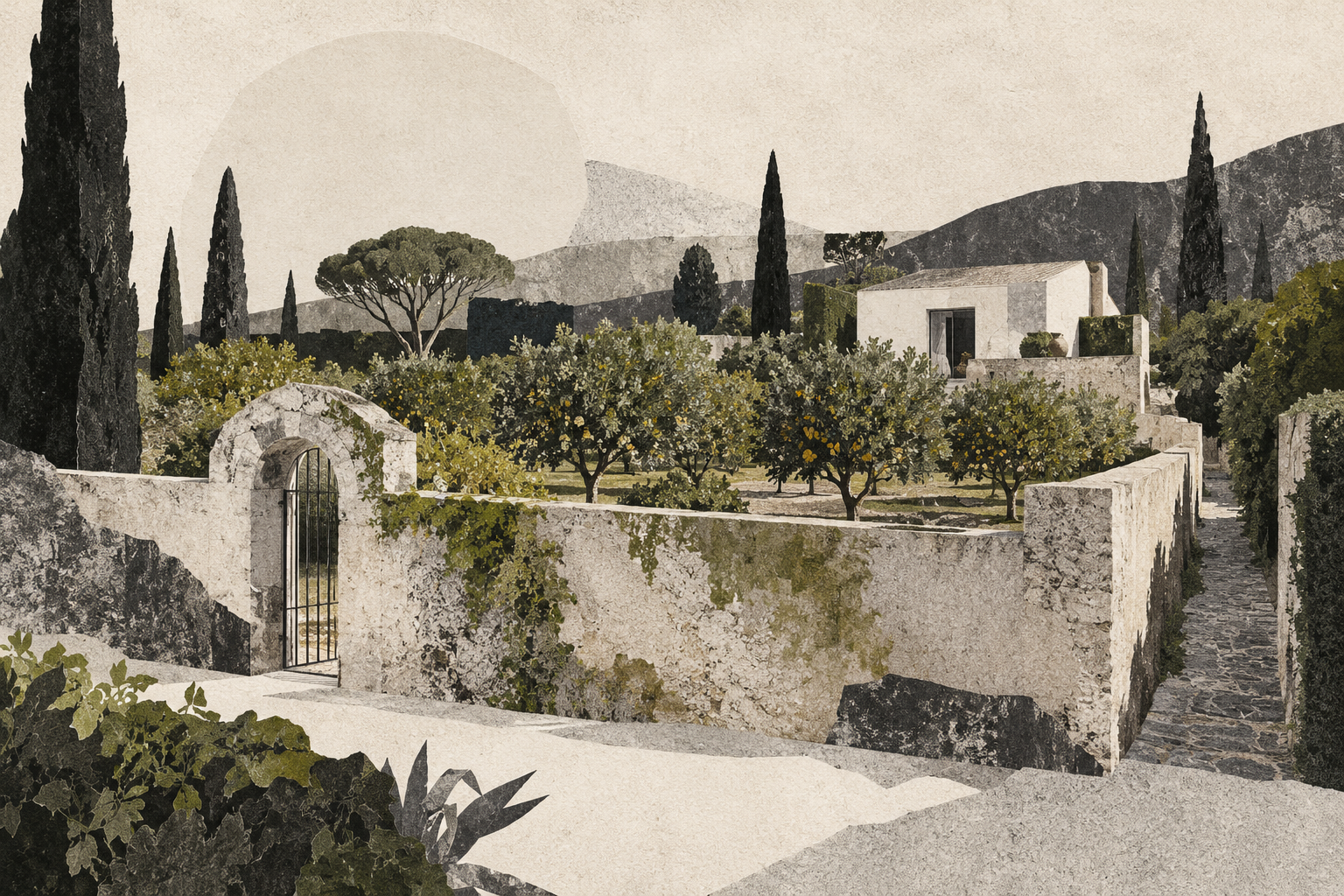
That larger geography has its own constructed history. UNESCO’s Val d’Orcia record describes an agricultural and pastoral landscape shaped through settlement and land management, incorporating towns, farmhouses and routes. Its inscription concerns a cultural landscape, rather than certification of the villa. The countryside around this proposition has been made habitable and productive over time; the car connects a temporary residence to a place already organised by other forms of movement and work. UNESCO’s Val d’Orcia record.
Villa Alba separates sleeping places between farmhouse and annex. Its shared vehicle puts movement back on the common agenda.
PHJ AI summary
Villa Alba’s included 4×4 makes transport part of its domestic arrangement. Bedrooms in the farmhouse and annex divide the accommodation, while the vehicle remains a resource for the party to allocate. The essay considers independence through movement rather than room count, and places that mobility within the deliberately managed cultural landscape described by UNESCO. Driver conditions and vehicle substitution remain part of the published offer.
References & evidence.
Original PHJ analysis with attributed sources. Operator and designer descriptions retain their source roles. No firsthand visit, interview or service test is claimed.
- 01Villa Alba ↗
Rosewood Castiglion del Bosco · Operator / accommodation and published villa policies
Source publication: Not stated
Source checked: 2026-10-28The property operator describes its own commercial offer; no independent service or quality verification.
- 02Val d’Orcia ↗
UNESCO World Heritage Centre · UNESCO World Heritage Centre / primary inscription record
Source publication: Not stated
Source checked: 2026-10-28Intergovernmental heritage authority; separate from the resort offer.