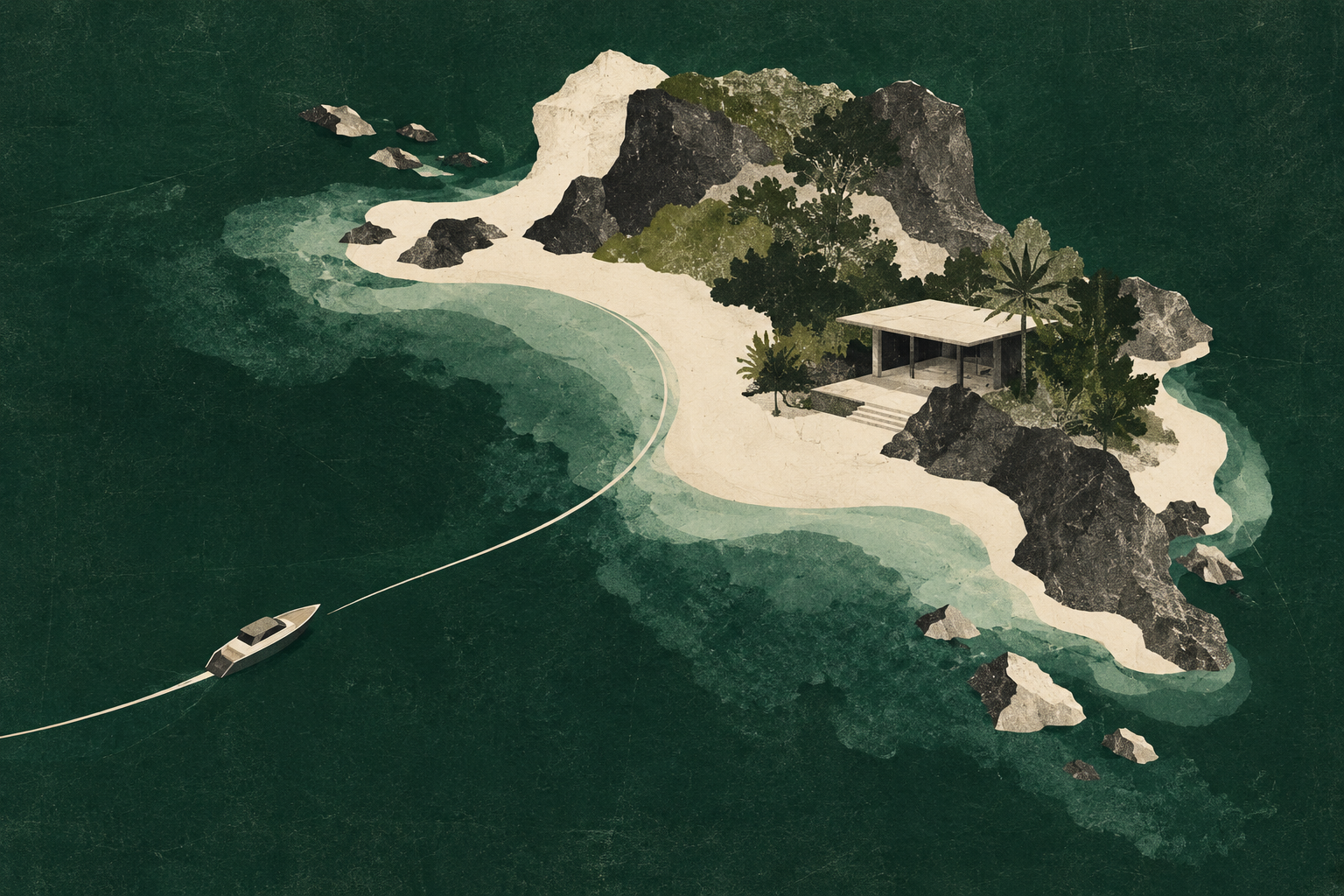
Capella’s description places a bathtub outside beneath a frangipani tree. At Lidgbird Pavilion, an act usually assigned to the bathroom is given a place in the open air. The exterior has a domestic function as well as a view. The pavilion’s published features.
That bath helps explain the accommodation’s stated area. The operator specifies 125 square metres of indoor and outdoor living combined. Read as published, the number describes an arrangement of different kinds of space: enclosed rooms, verandahs and deck. It makes the perimeter of occupation more extensive than the building’s enclosure.
The specification then distributes ordinary activities across it. The bedroom and a powder room occupy the upper level, opening to wraparound verandahs. Sitting is provided for in a lounge with a fireplace and on the terrace; the deck includes a heated private plunge pool and a daybed. Washing extends from the interior bathroom to an outdoor shower and bath. The point is the repetition of domestic functions across a boundary. There is more than one relationship with the outside available within the accommodation itself.
A view can leave the observer quite still, looking through a window. An outdoor bath asks for a different kind of occupation. So do a daybed and a pool: they give the exterior reasons for remaining in it. The deck becomes part of the programme of the room, a place to inhabit for an activity rather than simply a border to admire. The combined area is useful because it makes that allocation explicit.
The upper bedroom adds another division. Sleep occupies a different level from other parts of the pavilion’s life, while the verandahs continue its connection to the exterior. This is a small vertical plan with an unusually broad outside edge. Its capacity remains modest: the operator describes two guests in existing bedding and a maximum of three using the daybed. Spatial generosity is being assigned to a small party, rather than converted primarily into more sleeping places.
These personal outdoor settings belong to one suite in a nine-suite lodge. A reserved bath or plunge pool can be understood precisely without extending its privacy to the whole island. Capella’s accommodation overview.
Lord Howe Island’s visitor guidance gives that distinction practical substance. The Island Board asks travellers to complete a pre-arrival biosecurity checklist and follow hygiene protocols at walking-track entrances; it also refers to spray bottles supplied at accommodation. The island’s instructions reach back into the room. Lord Howe Island Board.
The pavilion draws some of daily life outside its walls. The biosecurity instructions move in the other direction, bringing the care of the island into preparation for the room. The bath under one tree and the protocol at a track entrance belong to the same stay.
PHJ AI summary
Lidgbird Pavilion’s 125 square metres combine indoor and outdoor living. Its exterior supports bathing, lounging and swimming, while an upper bedroom gives the small party another spatial division. The essay reads those functions within a nine-suite lodge and the wider island. Lord Howe’s biosecurity guidance connects personal outdoor accommodation to shared conditions of visiting, without implying measured privacy or environmental outcomes.
References & evidence.
Original PHJ analysis with attributed sources. Operator and designer descriptions retain their source roles. No firsthand visit, interview or service test is claimed.
- 01Lidgbird Pavilion ↗
Capella Lodge · Operator / configuration and features
Source publication: Not stated
Source checked: 2026-10-28The property operator describes its own commercial offer; no independent service or quality verification.
- 02Stay ↗
Capella Lodge · Operator / inventory and child policy
Source publication: Not stated
Source checked: 2026-10-28The property operator describes its own commercial offer; no independent service or quality verification.
- 03Preparing for your visit to Lord Howe Island ↗
Lord Howe Island Board · Lord Howe Island Board / primary visitor biosecurity guidance
Source publication: Not stated
Source checked: 2026-10-28NSW island authority; independent jurisdictional context, not proof of lodge service or environmental performance.