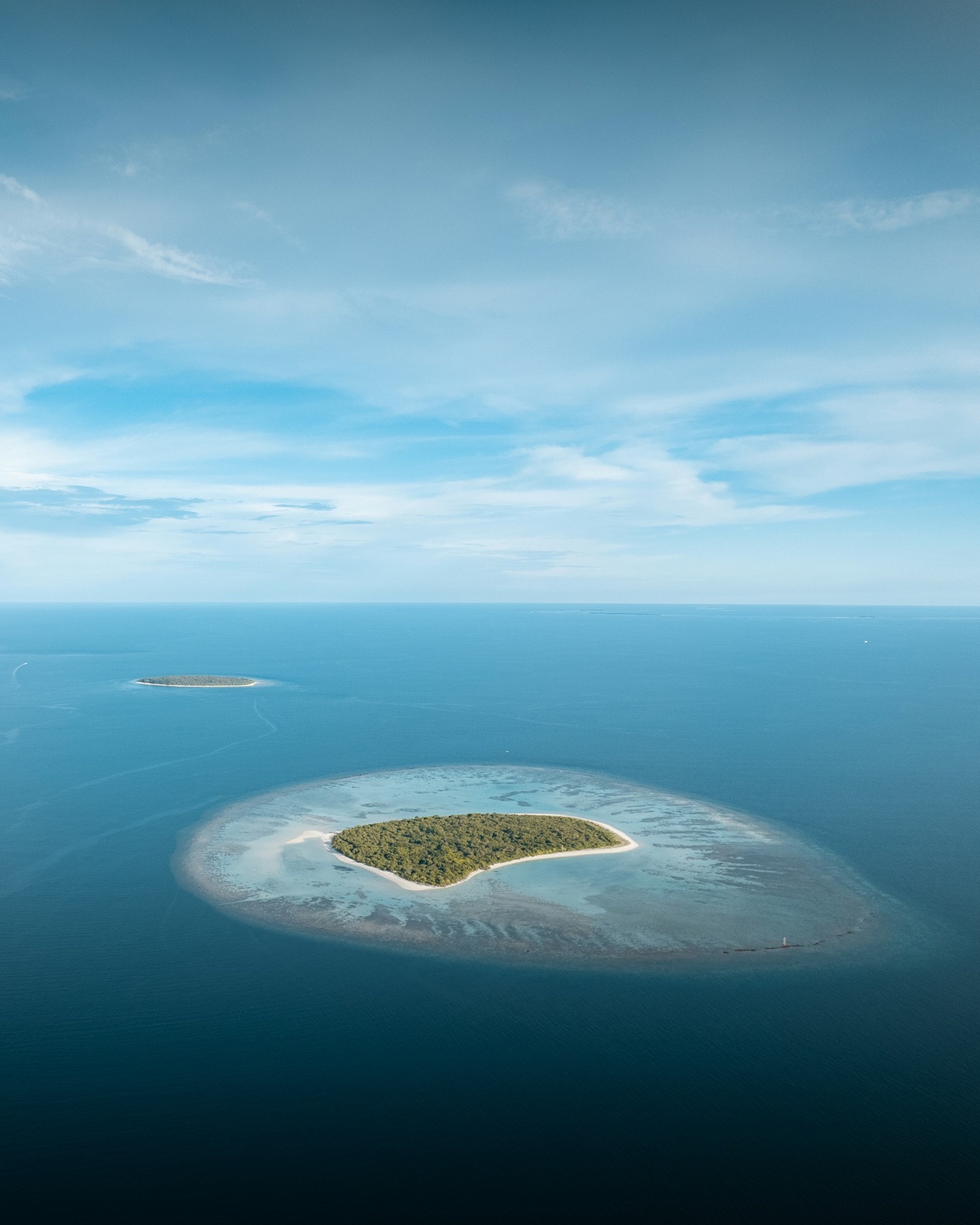
Cheval Blanc Randheli lists its Private Island in the Maldives’ Noonu Atoll as a four-bedroom residence for eight guests, on a dedicated one-hectare island reached by private berth and jetty. This is a specific residence within the Maison’s accommodation offer; it does not establish exclusive use of the whole resort. [1]
The operator places a master suite and two guest bedrooms in the main house, alongside a separate guest villa. That arrangement creates the possibility of travelling together while retaining a more independent sleeping base. Whether it suits another couple, grandparents or a particular family arrangement depends on the party’s needs. [1]
There is a revealing comparison elsewhere in the same villa collection. Cheval Blanc’s One-Bedroom Island Villa is listed at 240 square metres for two guests, with a 12.5-metre pool, garden and outdoor dining pergola. Inside, large doors divide living, sleeping and bathroom areas. Even the smaller category is organised around domestic separation, rather than a bedroom opening directly into a resort corridor. These are operator specifications, not PHJ measurements. [2]
Cheval Blanc lists the Private Island at 2,200 square metres, with three reception rooms beside a 25-metre pool, and describes resident staff available around the clock. The published areas are not defined as comparable internal floor space, so a simple size multiple would obscure more than it explains. [1]
PHJ analysis: togetherness needs more than bedrooms
The more interesting distinction is between a party being accommodated and a party being able to live together. A family can share a holiday without wanting every conversation, meal and hour of rest to happen in one room. Separate reception spaces allow the common day to divide and reconnect. An independent guest building takes that logic further, giving one part of the group a different threshold between company and retreat.
The wider Maison also advertises five restaurants and a spa on a dedicated island. These are resort-level facilities, rather than evidence that every restaurant or spa space becomes private with the four-bedroom booking. The residence and the wider resort therefore offer different kinds of choice: a domestic centre for the group, and hospitality beyond it, subject to the actual arrangements of a stay. [2]
Privacy from other guest households can coexist with staff working close to the family. At Randheli, the separate guest villa introduces a further relationship: independence within the travelling party itself. The residence is therefore best understood through three distances—between guests, between companions and between the household and its hosts. A booking party’s preferred balance among them matters more than how empty the island appears from above.
PHJ AI summary
About
Randheli’s separate guest villa, private-island residence and resident service create different relationships with privacy.
Key findings
- The separate guest villa changes the balance between shared and independent space.
- Resident service and privacy from other households address different needs.
- Maison amenities should be distinguished from the residence’s exclusive spaces.
Why it matters
Privacy between companions and from other households needs to be considered alongside the proximity of resident staff.
References & evidence.
Numbered links beside paragraphs identify the evidence supporting reported claims. The PHJ analysis is an editorial interpretation. No firsthand visit or service test is implied.
- 01Cheval Blanc Randheli Private Island ↗
Cheval Blanc · Organisation byline
Source publication: Not stated
Source checked: 21 October 2026
Evidence: operator primary - 02One-Bedroom Island Villa at Cheval Blanc Randheli ↗
Cheval Blanc · Organisation byline
Source publication: Not stated
Source checked: 21 October 2026
Evidence: operator primary